

When people describe Coosaw Point, they often talk about its character.
The open space.
The homes.
The streetscapes.
The density.
The feeling that this community is intentionally designed rather than simply built.
Those qualities didn’t happen by accident.
They began years before the first home was ever constructed.
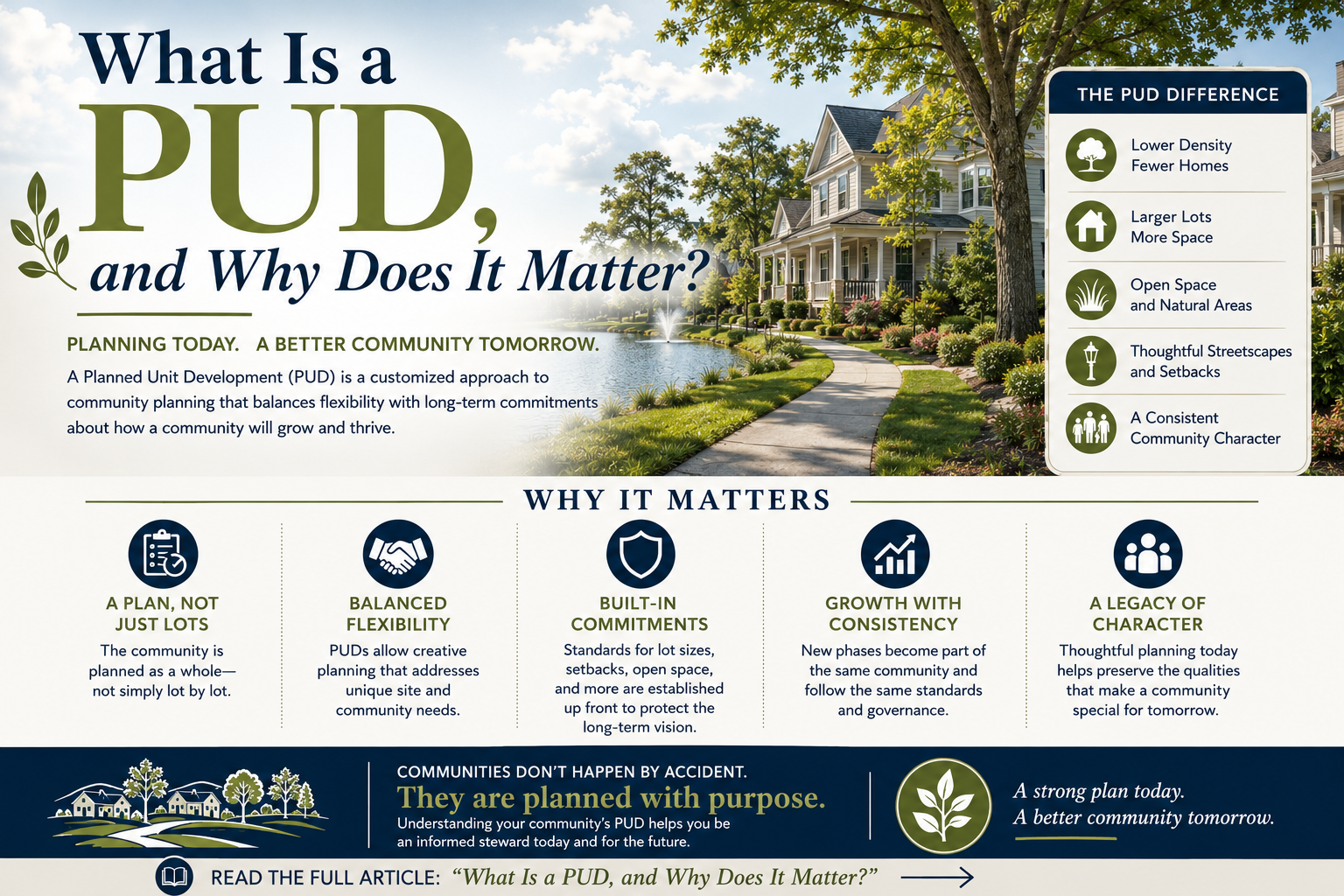
One of the most important reasons Coosaw Point looks the way it does is because it was developed as a Planned Unit Development, commonly referred to as a PUD.
While the term sounds technical, the idea behind it is surprisingly straightforward.
Planning a Community Instead of Just Building Houses
Traditional zoning establishes a standard set of rules for land use. It determines where homes, businesses, and other uses may be located and establishes requirements such as setbacks, lot sizes, and permitted density.
A Planned Unit Development takes a different approach.
Rather than applying only the standard zoning rules, a local government and a developer work together to create a customized development plan for a specific property. That plan balances flexibility with long-term commitments about how the community will ultimately be developed.
In other words, the community is planned as a whole—not simply lot by lot.
Why That Matters at Coosaw Point
For Coosaw Point, that planning made a significant difference.
When the property was rezoned into the Laurel Hill Planned Unit Development, the approved plan substantially reduced the number of homes that could ultimately be built—from approximately 1,393 dwelling units under the previous zoning to 450 homes under the negotiated PUD.
In exchange, the approved plan established many of the characteristics that define Coosaw Point today, including lower density, minimum lot sizes, setbacks, open space, and a single-family residential character.
Those aren’t simply preferences.
They became part of the framework that guided how the community would develop over time.
Understanding that helps explain why Coosaw Point looks and feels different from many other developments.
A Community Built Over Time
Communities like Coosaw Point aren’t completed all at once.
They grow through a series of planned phases, often over many years.
As each phase is added, it becomes part of the same community and is incorporated into the same governing structure. New property owners become subject to the same Declaration, Architectural Review standards, and assessment structure that already apply throughout the community.
Phase VI is simply the latest example of that process.
It isn’t a separate community.
It’s another chapter in the same community’s ongoing development.
Protecting the Original Vision
One question naturally follows.
How does a community maintain a consistent character when homes are built over many years and often by different builders?
The answer begins with the governing framework.
The PUD establishes the overall development plan. The Declaration, Architectural Review standards, and related governing documents establish many of the standards that apply throughout the community. Each new home is reviewed within that framework before construction begins.
Of course, written standards alone are only part of the equation.
Like any governing document, they depend upon consistent interpretation and application over time. As communities mature, property owners naturally become interested not only in what the governing documents require, but also in how those standards are administered.
Understanding both is part of becoming an informed steward of the community.
Looking Ahead
Like every governing framework, a Planned Unit Development can evolve through established legal processes. Those processes are neither automatic nor informal, and understanding how they work is an important part of understanding how communities grow and adapt over time.
We’ll explore those topics in future Knowledge Series sessions.
For now, the important takeaway is this:
The character of Coosaw Point didn’t simply happen.
It was planned.
Understanding that planning helps us better understand the community we enjoy today—and the responsibility we all share in preserving it for the future.
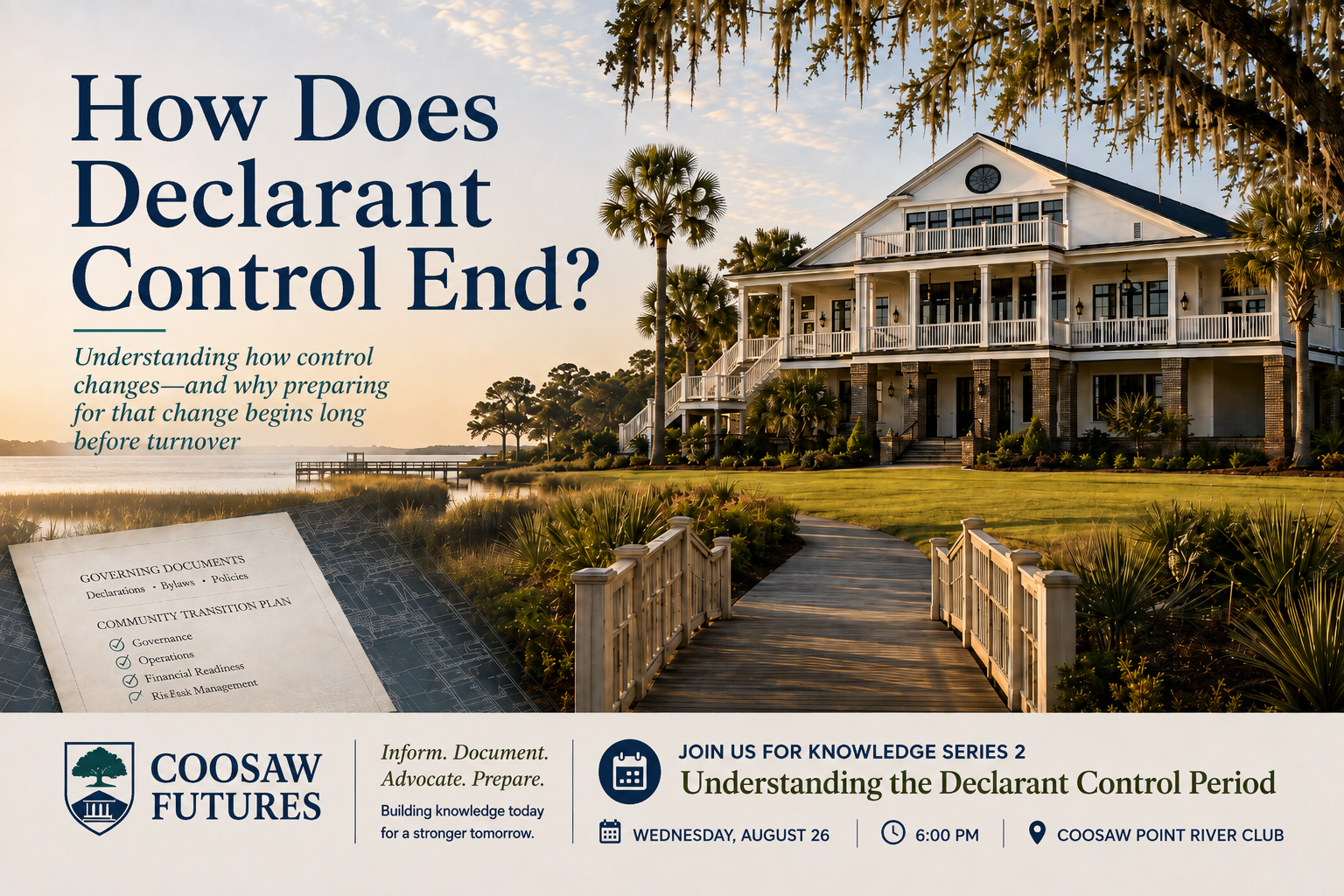
We’ll continue that conversation during Session 1: Community History & Development Structure on Wednesday, July 29, at 6:00 p.m. in the River Club.
Whether you’ve lived in Coosaw Point for years or have only recently arrived, we hope you’ll join us as we explore the history and development framework that helped shape the community we call home.
Before then, we’d invite you to consider one question:
When you look around Coosaw Point today, which aspects of the community do you value most—and how much do you think those qualities were the result of intentional planning?
There are no right or wrong answers.
That’s exactly the kind of conversation the Knowledge Series is designed to encourage.
Coosaw Futures, Corp. is an independent, owner-formed nonprofit whose mission is to Inform, Document, Advocate, and Prepare—helping Coosaw Point property owners better understand their community through education, historical preservation, and constructive civic engagement. Learn more at coosawfutures.org.

Leave a Reply
You must be logged in to post a comment.